
NFC Smart Labels/NFC Tags UK

Engage your customers with unique connectible tags

What is an NFC tag?

An NFC tag is a small chip that stores and transmits data wirelessly to any NFC-enabled smartphone. There’s no battery in the tag, and most modern devices don’t require an app to scan.

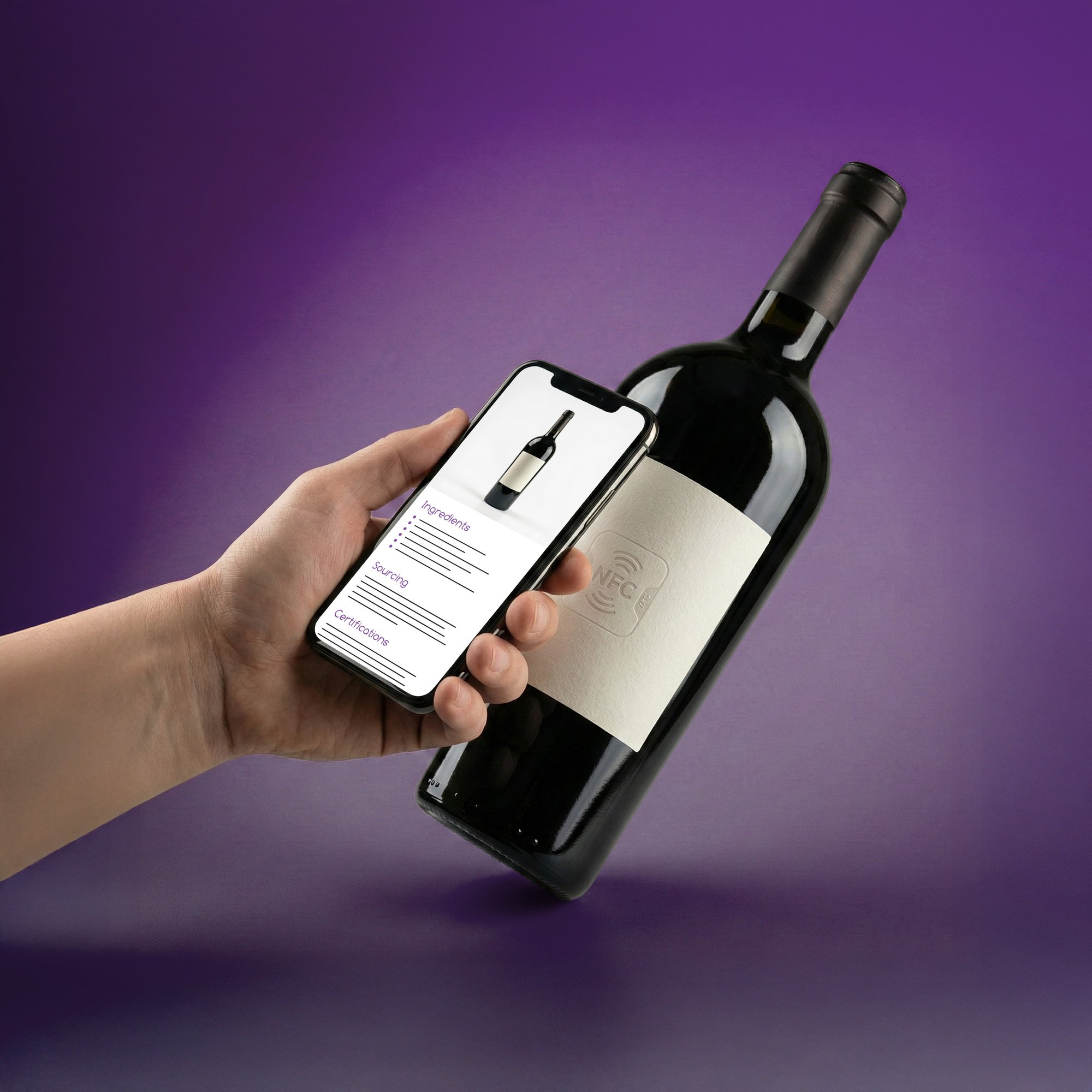
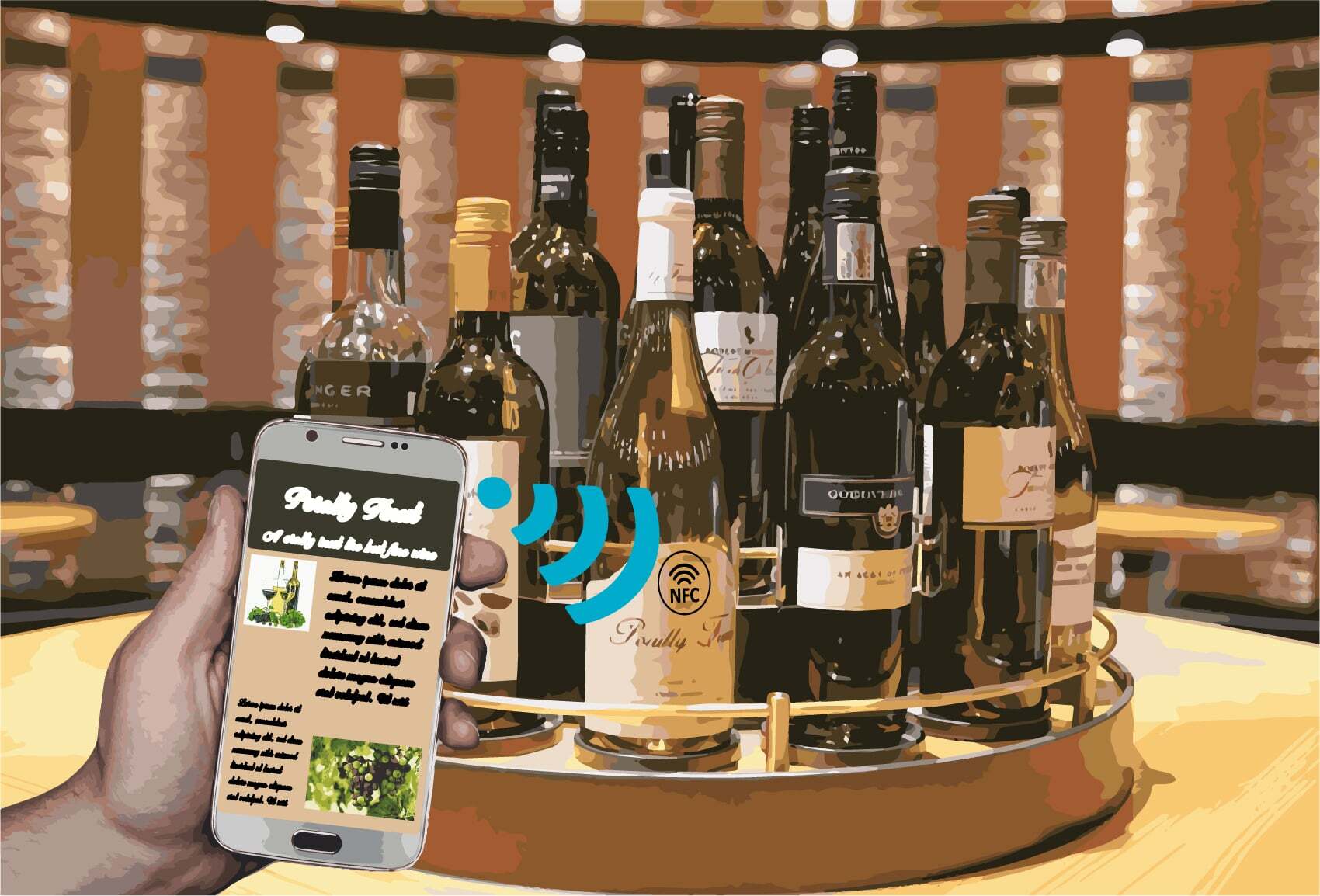
When an NFC tag is added into a label, you get an NFC smart label – giving you a live, updatable channel to every customer who buys/sees your product. This allows you to link directly to time-limited promotions, seasonal campaigns, recipes, tutorial videos, or social media without changing a single printed label.

We design and manufacture NFC tags and NFC smart labels in the UK, turning ordinary product labels into a direct line between your brand and your customer.

PL-NFC-Label

How do NFC tags work?

NFC tags communicate using radio waves at 13.56 MHz, which is the same frequency used in contactless card payments. Each label contains a tiny chip and antenna. When a smartphone is held close, the phone's NFC reader energises the chip through magnetic induction, and data transfers instantly. The chip itself needs no power source; it draws what it needs directly from the reading device.

It's the same technology behind Apple Pay and Google Pay, which means your customers already know how it works.

Modern iPhones (XR and later) and virtually all Android handsets read NFC tags natively, directly from the lock screen; they do not need to download an app for standard web-linked tags.
NFC Shot 3-1

What can you use NFC tags for?

You can update the destination of your tags in real time, so the same label that runs a Christmas competition in December can serve a summer campaign six months later.

For businesses, NFC labels are a powerful tool for data capture and provide unique opportunities for promotion. Every tap is a data point: when customers interact, where they are, and what they engage with. That intelligence feeds directly back into your marketing.

The labels also make loyalty programmes, prize draws, and exclusive content easier to access. No QR codes to misread, no URLs to type; engage with just a tap.

Other uses for NFC smart labels

The applications of NFC tags go far beyond customer engagement. They can track whether products have been exposed to unsuitable temperatures during transit, which is useful in food, pharmaceutical, and cosmetics supply chains where cold-chain integrity is essential. They can support inventory management, confirm whether packaging has been tampered with, and serve as a strong line of defence against counterfeiting for luxury and premium brands.

Because NFC tags are extremely difficult to clone reliably, they've become an increasingly common authentication tool. A customer tapping a label to confirm a product is genuine takes seconds and builds confidence in your brand.

 

Let us help you engage with your customers

Smart labels are one of the most versatile developments in product labelling in years, and the use cases keep growing.

At Premier Labels, we handle everything in-house, including design support, coding, and production, all from our UK facility in Guildford. Whether you're looking to add NFC to existing labels or building something from scratch, we'll make it work.


 

We work with leaders in luxury goods

“The re-production of our label is really all or more than we could have wished for. Feedback from our customers has been amazing, so thanks to Premier Labels for getting the label absolutely perfect.”

Sue Bearcroft
Director - The Cornish Spirits Drink Company Ltd

“Their service is quick and reliable and I am so pleased I worked with them to relaunch my brand. I would highly recommend using Premier Labels. I will definitely continue to use them in the future.”

Naomi Cardy
Business Owner - Homes With Nomes

“Working with Premier Labels has been a fantastic experience. Their ordering process is seamless, communication is excellent, and the quality of their labels is top-notch. They offer a diverse range of products, making the entire ordering and design process hassle-free."

Martha Garbe - Director at Basalt Distillery

“We are so delighted with the labels provided by Premier Labels for our wine and gin bottles. The quality of label is great and the whole team, from design through to invoicing, is absolutely great. Very friendly and professional service which I highly recommend."

Caroline - Naturally Terlingham

“Working with Premier has been a pleasure - efficient, pragmatic and open minded - what's not to love?"

Alex John - CEO at Nicholson

FAQs

What is an NFC tag?

NFC stands for Near Field Communication. An NFC tag is a small, passive electronic device, typically a chip and antenna embedded in a label or sticker, that can wirelessly transmit data to any NFC-enabled smartphone when the two are brought within a few centimetres of each other. You'll also see them called smart tags or info tags.

They contain no battery and require no power of their own; they draw energy from the electromagnetic field generated by the reading device at the moment of contact.

What is an NFC tag reader?

Any NFC-enabled smartphone acts as an NFC reader for standard label interactions. The phone generates a small electromagnetic field, which powers the tag and initiates data transfer. More specialised NFC readers, used in industrial, retail, and access control settings, can also read and write to tags, and communicate with other active NFC devices.

For the vast majority of consumer-facing label applications, your customers' phones are all the reader they need.

Do I need an app to read an NFC label?

For most everyday NFC label interactions, no. On Android, NFC tag reading has been built into the operating system for years; hold the phone close to a tag and it responds automatically. On iPhone, native background tag reading with no app required is supported on the iPhone XR and all subsequent models, including the full iPhone 11, 12, 13, 14, 15, 16 and 17 ranges. Older iPhones from the 7 onwards can still read NFC tags but require an app or a Control Centre shortcut to do so.

This means that the overwhelming majority of smartphones in use today will interact with a correctly encoded NFC label without the customer needing to download anything.

What is the difference between NFC and RFID?

NFC is a subset of RFID (Radio Frequency Identification). Specifically, it operates within the High Frequency (HF) band at 13.56 MHz. All NFC is RFID, but not all RFID is NFC.

There are a couple of differences, boiling down to range and use case. Standard RFID tags can be read at distances of up to 20 metres using dedicated reader infrastructure, which makes them well suited to warehouse inventory management, logistics tracking, and loss prevention. NFC tags operate at close range, typically under 10 centimetres, and are read by smartphones, which makes them better suited to consumer-facing applications: product authentication, brand engagement, and contactless payments.

NFC also supports two-way communication between devices, whereas traditional RFID operates on a one-way basis. That two-way capability is what enables things like Apple Pay and Google Pay to function, where the phone and payment terminal exchange data in both directions to authorise a transaction.

For product labels, NFC is almost always the right choice when the end user is a consumer with a smartphone. RFID tends to be the answer when the reader is a piece of fixed or handheld infrastructure in a supply chain setting.

How do I use NFC tags on my product labels?

The process is straightforward. Premier Labels integrates the NFC chip and antenna into the label during production, so from a physical standpoint nothing changes about your label format or application process. Once manufactured, the tags are encoded, either with a fixed destination such as a URL, or with a dynamic link that can be updated without changing the label itself.

From the customer's perspective, they simply hold their phone near the label. The phone detects the tag, and whatever you've programmed it to do, whether that's opening a webpage, launching a video, displaying a competition entry form, or confirming authenticity, happens automatically.

The content the tag points to can be changed at any time. That means the same printed label run can support multiple campaigns across its lifetime, which is particularly valuable for brands that produce long runs and want flexibility without reprinting costs.

Can NFC labels be custom printed and branded?

Yes, fully. At Premier Labels, we produce NFC smart labels with the same finishing options available across our wider label range. That includes full-colour print, embossing, hot foil, spot varnishing, and specialist substrates. The NFC component sits within the label construction and doesn't constrain what the front face can look like. Your label can carry your full brand identity with no visible indication that a chip is embedded at all, or you can include a tap icon if you want customers to know it's interactive.

We can also work with your existing label design if you're looking to add NFC functionality to a label you're already printing elsewhere. Get in touch, and we'll talk through what's involved.

What can NFC labels link to?

Almost any digital content or action. Common uses include product web pages and brand storytelling content, how-to videos and assembly guides, competition and prize draw entry forms, time-limited promotional offers, social media profiles and campaigns, loyalty scheme sign-ups, and product authentication portals. More operationally, NFC tags can link to temperature and condition monitoring logs, or serve as a trigger point for inventory and supply chain systems.

Because the destination is digital and updatable, the label doesn't need to change every time your campaign does. One label, many possible journeys.

Are NFC labels hard to counterfeit?

Significantly harder than printed labels or QR codes alone. An NFC chip has a unique identifier that cannot be cloned through standard means, and more advanced chips using cryptographic authentication generate a unique encrypted code with every tap, making any attempt at replication detectable. This is why NFC labels have become a go-to anti-counterfeiting tool for luxury goods brands, premium spirits producers, and pharmaceutical manufacturers, where the cost and reputational risk of fakes is high.

A customer who taps a label and receives a genuine authentication response has confidence in what they've bought. A counterfeit that lacks the chip, or carries an incorrectly cloned one, fails the check immediately.

Want to ask us something?

Get in touch for a no-obligation chat about your labelling needs. 

General Enquiry