Discover UK requirements for food and drink labelling, including mandatory information, alcohol labelling rules, and barcode guidance for bottles and cans.




.png)
From ingredients and allergens to alcohol content and barcodes, every food or drinks label must communicate key information clearly while still reflecting the identity of your brand.
For food producers, beverage manufacturers and private label businesses alike, understanding UK labelling requirements is essential before any product reaches the shelf.
In this guide, we explore the key elements of food labelling and drink labelling in the UK, including mandatory information, alcohol labelling rules and barcode requirements.
Product labels are often the first interaction a consumer has with your brand. Before someone tastes the product, the label helps to convey quality, safety and professionalism. For businesses in the UK food and drink sector, labels must balance three priorities:
If labels fail to meet regulatory standards, products may be removed from sale or require costly reprinting. At the same time, labels that appear cluttered or confusing can reduce shelf appeal and weaken brand trust.
This is why it’s essential for manufacturers to choose experienced specialists when producing bottle, can, and alcohol labels, ensuring their packaging meets both regulatory and commercial expectations.
Food and drink products sold in the UK must include specific information so consumers can make informed decisions about what they are buying and consuming.
The precise requirements depend on the type of product, but most food and beverage labels must include the following core elements:
Alcohol labels have additional requirements compared to standard food products. Because alcohol consumption carries health implications, specific information must be clearly presented. These essential details include:
Alcoholic beverages must display their alcohol content as Alcohol by Volume (ABV). The ABV must appear within the same visual field as the product name and be clearly legible.
Alcohol products must also display their total liquid volume, usually expressed in millilitres or litres.
Some alcoholic drinks contain allergens such as sulphites, barley or wheat. These must be declared clearly within the label information.
While not always mandatory, many alcohol brands include responsible drinking messages or links to health guidance.
Many alcohol producers include batch codes or lot numbers to ensure traceability during production. These codes help identify production runs if a recall or investigation becomes necessary.
Barcodes are a key part of modern retail packaging. They allow products to be scanned quickly at checkout and tracked throughout supply chains.
Most supermarkets and major retailers require GS1 barcodes, which are part of a global identification system.
Barcodes allow retailers to:
Without a barcode, many products cannot be stocked by large retailers.
For UK manufacturers, the most common option is registering with GS1 UK, which provides unique product identifiers.
Each barcode represents a specific product variation. This means different flavours, sizes or packaging types usually require different codes.
Barcode placement is important for scanning accuracy.
Best practices include:
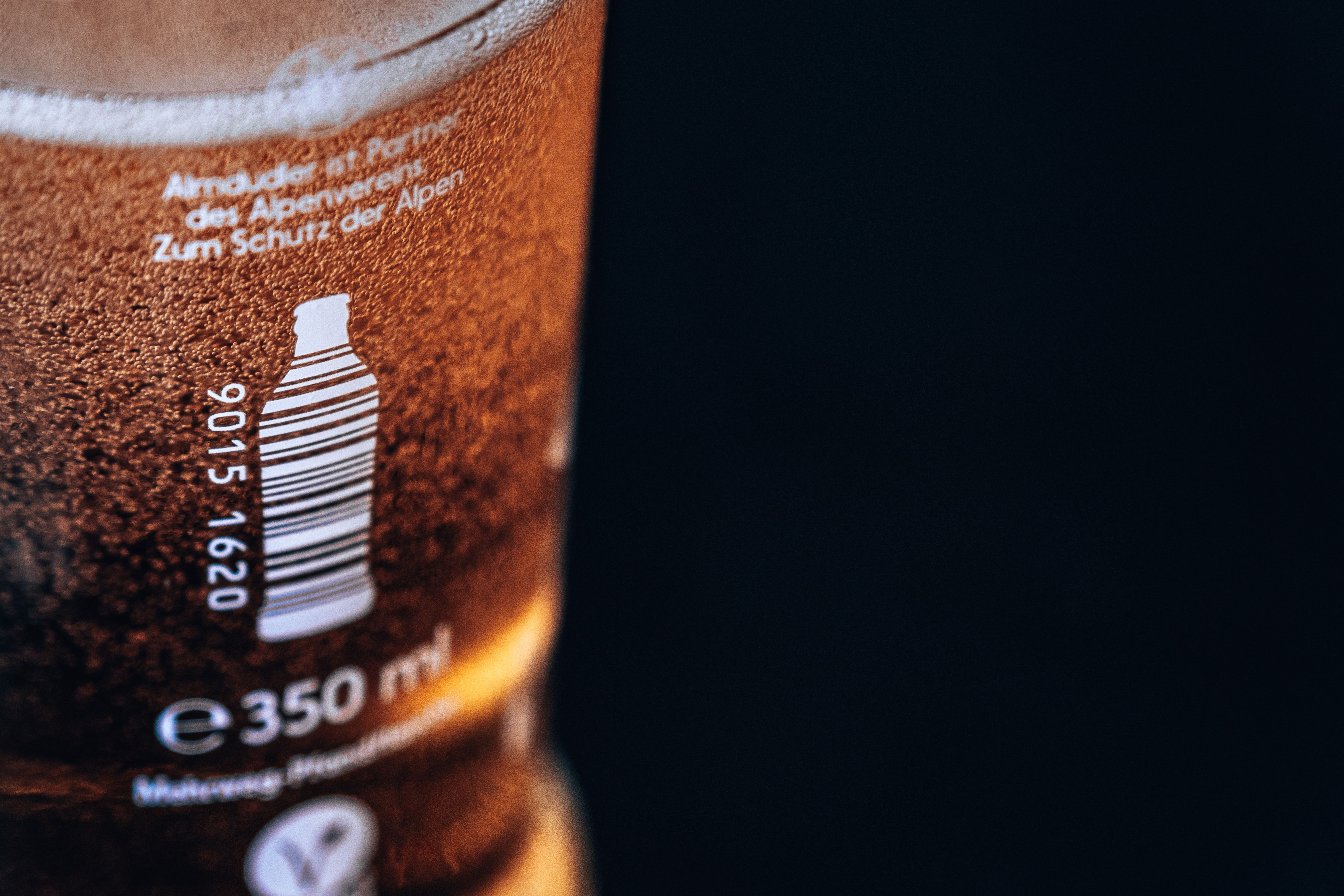
Choosing the right material is essential for every beverage label. Drink containers often experience moisture, temperature changes and frequent handling, so materials must be durable while still looking appealing. The most appropriate drink label materials include:
Ideal for wine, craft spirits, and premium beverages. Paper offers excellent print quality and works well with embossing, foil stamping, or textured finishes. However, protective coatings may be needed in damp conditions.
Materials like polypropylene or PET are highly durable and moisture-resistant, making them suitable for soft drinks, bottled water, and refrigerated beverages. They offer strong adhesion and clear printing, staying intact during transport, chilling, or condensation.
Perfect for a modern, minimalist look where graphics appear to float on the bottle. Clear film works well with metallic inks, spot varnish, and transparent design elements.
The right material ultimately depends on the product, storage conditions and desired brand presentation.
While meeting regulatory requirements is essential, the look and feel of a label can really influence purchasing decisions. The most effective bottle and alcohol labels balance compliance with creative branding. Here are your three key design considerations:
Make the most important details immediately visible, like the product name, brand logo, and key benefits, while regulatory information sits in supporting areas.
Even on smaller packaging, text needs to be easy to read. Use adequate font sizes, strong colour contrast, and clear spacing.
The label’s finish can shape how a product is perceived. Options like matte or gloss lamination, soft-touch coatings, embossing/debossing, or metallic foils can all help you stand out on the shelves.
Food and drink labelling requirements can be complex, particularly when multiple regulations and product variations are involved. Working with an experienced label manufacturer can help ensure:
Professional label partners can also advise on material selection, barcode placement and finishing techniques to ensure your labels look as good as they perform.
At Premier Labels, we specialise in creating bottle and alcohol labels that help UK food and drink brands stand out. From a range of materials and finishes to advanced printing techniques, we make sure your labels look great and perform reliably.
Whether you’re launching something new or refreshing an existing product, our team can guide you every step of the way. To explore your options, get in touch today.
Disclaimer: The information provided in this article is intended as general guidance only and should not be considered legal or regulatory advice. Labelling requirements vary depending on the product and applicable legislation. Businesses are responsible for ensuring compliance with relevant regulations and should seek independent professional advice where appropriate.



Premier Labels
Unit 4, Riverway Industrial
Estate
Old Portsmouth Road
Guildford, Surrey GU3 1LZ